By Ishola Feranmi
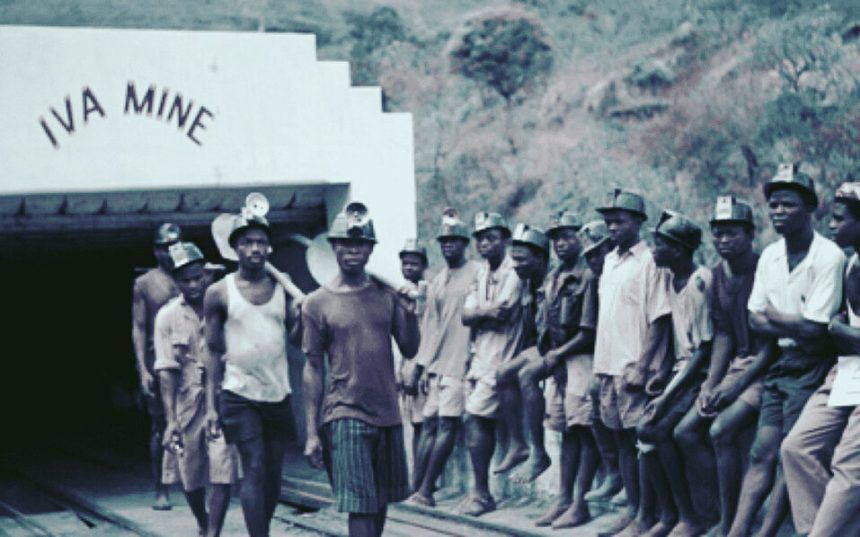
Activist and human rights advocate, Francis Nwapa, has called on Nigerian workers to rebuild an independent and radical workers’ movement, seventy-seven years after colonial authorities killed 21 striking miners and a bystander in the Iva Valley massacre in Enugu.
Mr Nwapa made the call in a statement on Wednesday to commemorate the anniversary of the massacre, which occurred on November 18, 1949, at a British government-owned coal mine.
According to him, the massacre occurred when colonial police opened fire on striking miners who were demanding better wages and improved working conditions. At least 51 people were reportedly injured in the incident.
Mr Nwapa said the miners had embarked on a go-slow protest over poor remuneration and discriminatory labour practices under colonial rule.
“Today marks 77 years since the Iva Valley massacre. On 18 November 1949, 21 striking miners and a bystander were shot dead at a British government-owned coal mine at Enugu, and 51 were injured,” Mr Nwapa said.
“Their crime was demanding better wages and working conditions under a colonial system that paid Africans less for the same labour. The miners had occupied the mine when colonial police opened fire,” he added.
He noted that the incident was proof of the exploitative nature of colonialism, adding that African workers who demanded fair treatment were met with state violence while the continent’s resources were extracted for foreign interests.
Mr Nwapa cited the 1935 and 1940 Copperbelt miners’ strikes in Northern Rhodesia, the 1941 killings of striking workers in the Belgian Congo, and the 1960 Sharpeville massacre in South Africa as parallel historical labour struggles across Africa.
He called for the enforcement of a February 2026 judgment by Justice Anthony Onovo of the Enugu State High Court, which reportedly ordered the British government to pay £20 million each to the families of the 21 miners. According to him, the British government has yet to respond to the judgment.
Mr Nwapa urged the Federal Government to pursue the enforcement of the ruling through legal and diplomatic channels, formally present the judgment to British authorities, and publicly disclose the steps taken to secure compliance.
He demanded a public apology from the British government and the release of colonial-era records relating to the massacre.
The activist criticised the leadership of the Nigeria Labour Congress (NLC) and the Trade Union Congress (TUC), accusing the labour groups of compromising workers’ interests amid the prevailing economic challenges in the country.
He cited the removal of fuel subsidies, rising living costs, inadequate wages, and the casualisation of labour as some of the challenges confronting Nigerian workers.
The activist called on workers to organise independently in workplaces, communities, and campuses while advocating the emergence of new union leaders who would be accountable to workers.
He also called for the establishment of an independent mass working-class political party, funded by workers’ contributions and governed democratically.
He advocated progressive taxation of wealthy individuals and big businesses as a measure to tackle corruption, as well as an end to debt repayments, which he said were worsening the country’s economic difficulties.